Gioachino Rossini (1792~1868)
Il Turco in Italia
Sunday, July 12, 2026
Alexander Kasser Theater
Montclair State University
1:30 pm Pre-opera Serenade
2:00 pm Pre-opera Lecture
3:00 pm Opera
Thursday, July 16, 2026
Rose Theater
Jazz at Lincoln Center
6:00 pm Pre-opera Serenade
6:30 pm Pre-opera Lecture
7:30 pm Opera
Opera Buffa in two acts
Libretto: Felice Romani
Premiere: 14 August 1814, Teatro alla Scala, Milan
U.S. Premiere: 14 March 1826, Park Theatre, New York
| Selim, a Turkish Prince, on his travels, formerly the lover of Zaida, and | |
| now enamoured of Fiorilla | Vincent Graña |
| Donna Fiorilla, a coquettish lady, wife of Don Geronio | Kresley Figueroa |
| Don Geronio, an old, wealthy, weak, and timid man | Mattia Venni |
| Don Narciso, in love with Fiorilla | Max Alexander Cook |
| Prosdocimo, a Poet, and an acquaintance of Don Geronio | Hans Tashjian |
| Zaida, formerly a slave, and betrothed to Selim--disguised as a gipsy | Sabatina Mauro |
| Albazar, an old confidant of Selim, afterwards disguised as a gipsy; the | |
| follower and friend of Zaida | David Freides |
Teatro Nuovo Chorus and Orchestra
Elisa Citterio, Primo Violino e Capo d’Orchestra
Derrick Goff, Maestro al Cembalo
Sung in Italian with English supertitles.
The performance of Il Turco in Italia lasts approximately 3 hours 05 minutes including one intermission.
Il Turco in Italia: Belated Justice
“he was suddenly on top of the world”
Gioachino Rossini was the hero of all Milan in 1813 when he won contracts for a pair of new operas at La Scala. He had made his debut there with La Pietra del Paragone the previous year–a runaway hit, filling the big theater for 53 evenings. In the meantime he had produced Tancredi and L’Italiana in Algeri for Venice, and both quickly made their way to Milan with equal success. At the age of 21 he was suddenly on top of the world, the most-sought composer on the peninsula.
Heroes have to meet adversity, though, so the young genius was due for a setback. Aureliano and Il Turco were tepidly received in Milan, and (not for the last time) Rossini was accused of repeating himself. It was not fair–both works are quite original and individual–but the setup was all too easy for seeing the heroics of Aureliano as a sequel to Tancredi, and the very title pre-destined the “Turk in Italy” to seem like a knock-off of the “Italian in Algiers.” Rossini took it in stride, made his way south, solidified his fame with triumphs in Rome and Naples, and maintained unquestioned supremacy over the operatic scene until he voluntarily relinquished it after Guillaume Tell in 1829.
“70% Rossini and 30% all other composers combined”
By that time he was so dominant that the repertory of theaters throughout Italy consisted of about 70% Rossini and 30% all other composers combined. No-one before or since has claimed a comparable share. And Il Turco took its place among his other gems for many years. There were well over a hundred productions before the work started to fade, as the next generation of composers asserted its own claims.

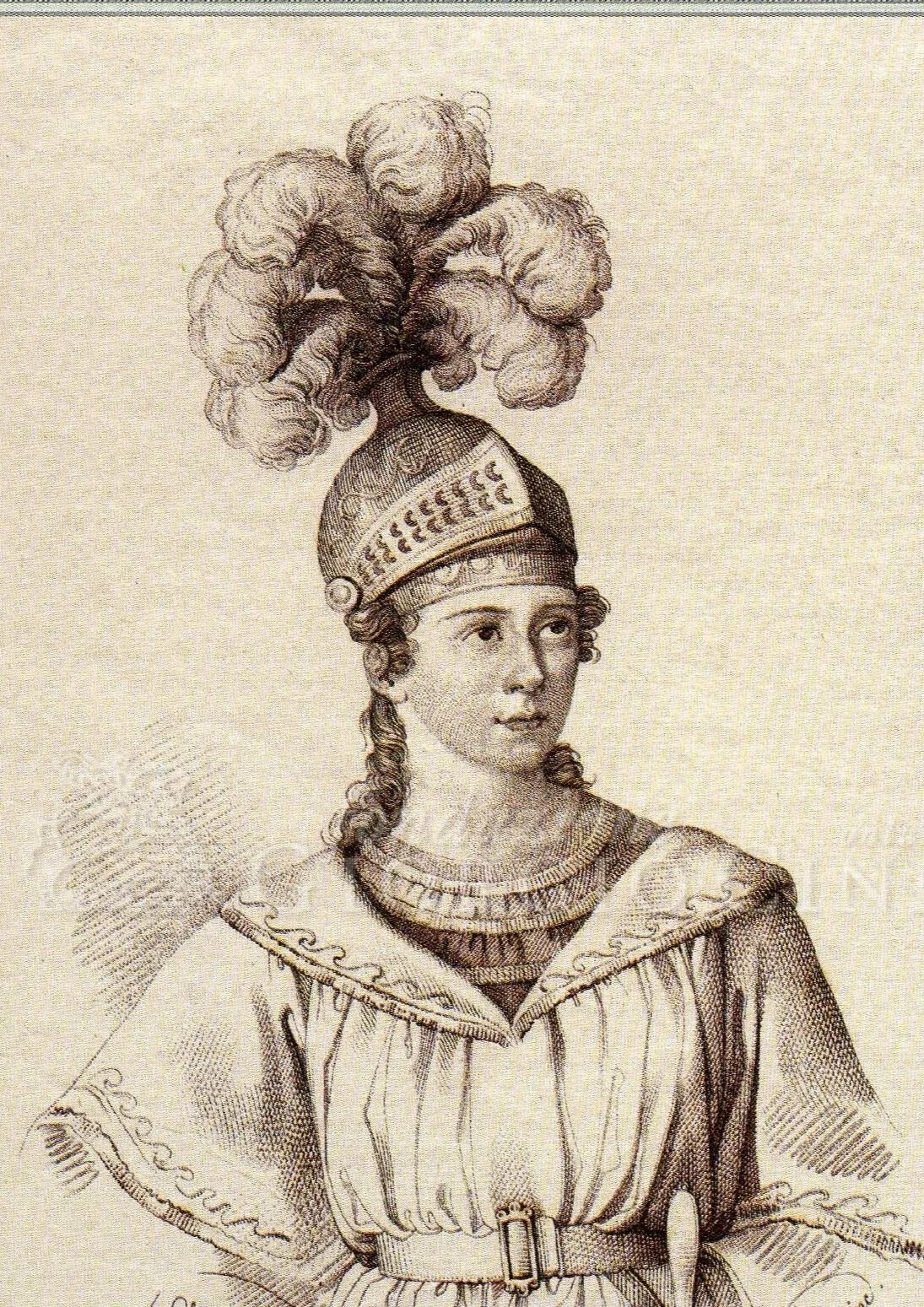
Carlo Angrisani, the Selim of the New York 1826 performances - engraving by Antonio Verico. SEE NOTE BELOW

Maria Malibran
- portrait by François Bouchot
The García season in America reflects all of this: their repertory too was majority-Rossini (five out of the nine operas), and they too considered Il Turco in Italia worthy of headline status. However, in contrast to Il Don Giovanni, Teatro Nuovo will not at all emulate the Garcías’ production, but instead try to imagine what they must have hoped to present. There is a story behind this difference of approach.
The superstar of the New York season was García’s daughter Maria, soon to become the world’s most celebrated and highest paid prima donna. She was just 17, but she was ready, after years of training by her father, and had made a sensational London debut in June of 1825 in the same opera that opened the New York season, Il Barbiere di Siviglia. The charming Rosina was followed by the heroic Tancredi and then the tragic Desdemona. Her fourth Rossini heroine was supposed to be the flirtatious and independent Fiorilla in Il Turco. But Maria’s own independence intervened.
“All New York was smitten”
All New York was smitten with the young diva. So, sometime early in the season, was Eugène Malibran, a French merchant who proposed to the headstrong girl and married her on 23 March 1826. It is still not clear exactly what her father thought about this; some accounts suggest he was furiously opposed; others claim that Malibran offered to bail the company out of its financial straits in return for his consent. In any case it was understood that Maria would retire from the stage, which put the troupe into a quandary: Could they perform successfully without their headliner?
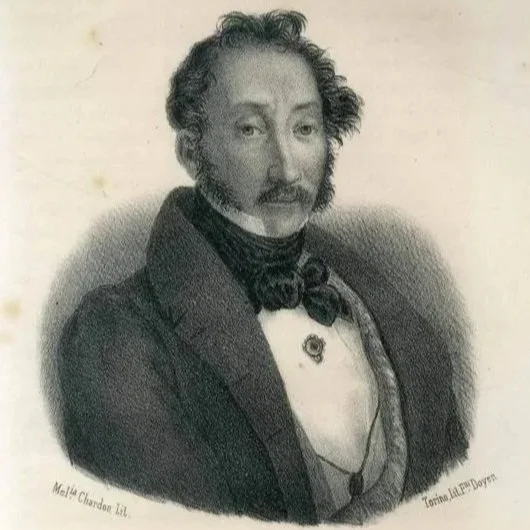
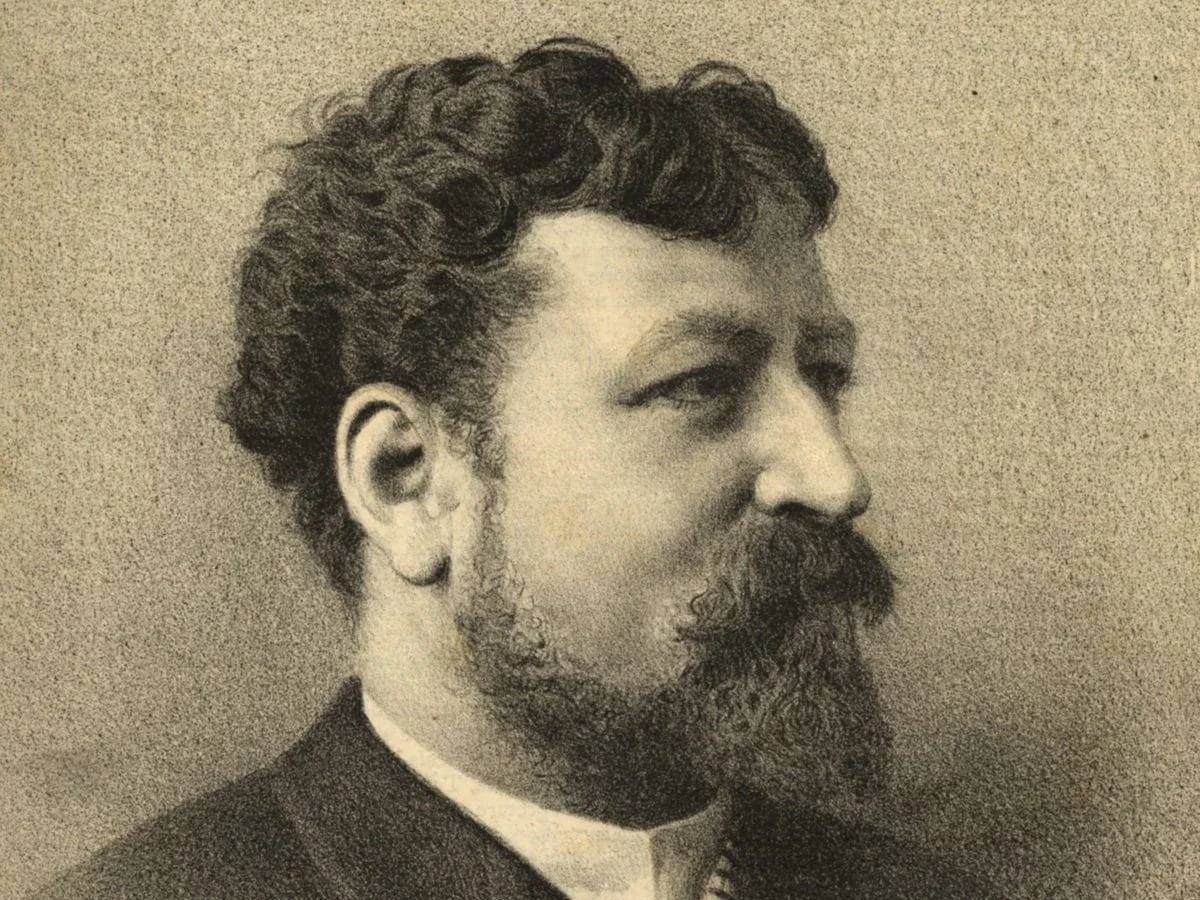
Felice Romani
- Engraving by Charles Chardon the elder
Il Turco in Italia proved that they could not. The crippled company patched together a hasty edition as best they could. Two ensembles from La Cenerentola (also in rehearsal) were stitched in. The last-minute Fiorilla (one Mme. Barbieri, who had been brought along to sing Amenaide opposite Maria’s Tancredi) omitted both of the heroine’s arias. García père, beset with hoarseness and no doubt stressed by events, also skipped his in the leading tenor part. This left the opera to be carried by the lower voices: Angrisani as the Turk, Rosich as the bumbling husband, and García fils in the role of the Poet. It wasn’t enough; Il Turco was a fiasco, running for just four evenings.
As matters turned out, M. Malibran was in no position to help the company financially. He had posed as a wealthy man, but was on the verge of bankruptcy. Maria quickly patched things up with her father and returned to sing in the remaining four operas, including Il Don Giovanni. By the time she left New York her husband was under house arrest and she never saw him again. But no attempt was made to revive Il Turco.
“a Lorenzo da Ponte connection”
That is a pity, because this opera too has a Lorenzo da Ponte connection, even if indirect. Rossini’s collaborator for both Scala operas in 1813-14 was another brilliant twenty-something newcomer, Felice Romani, who would go on to pen Anna Bolena, Norma, La Sonnambula, Lucrezia Borgia, and L’Elisir d’Amore among many more. Earlier in that season came one of the rare Italian outings of Così fan tutte, and it’s clear both from poem and score that the young Italians had paid attention.
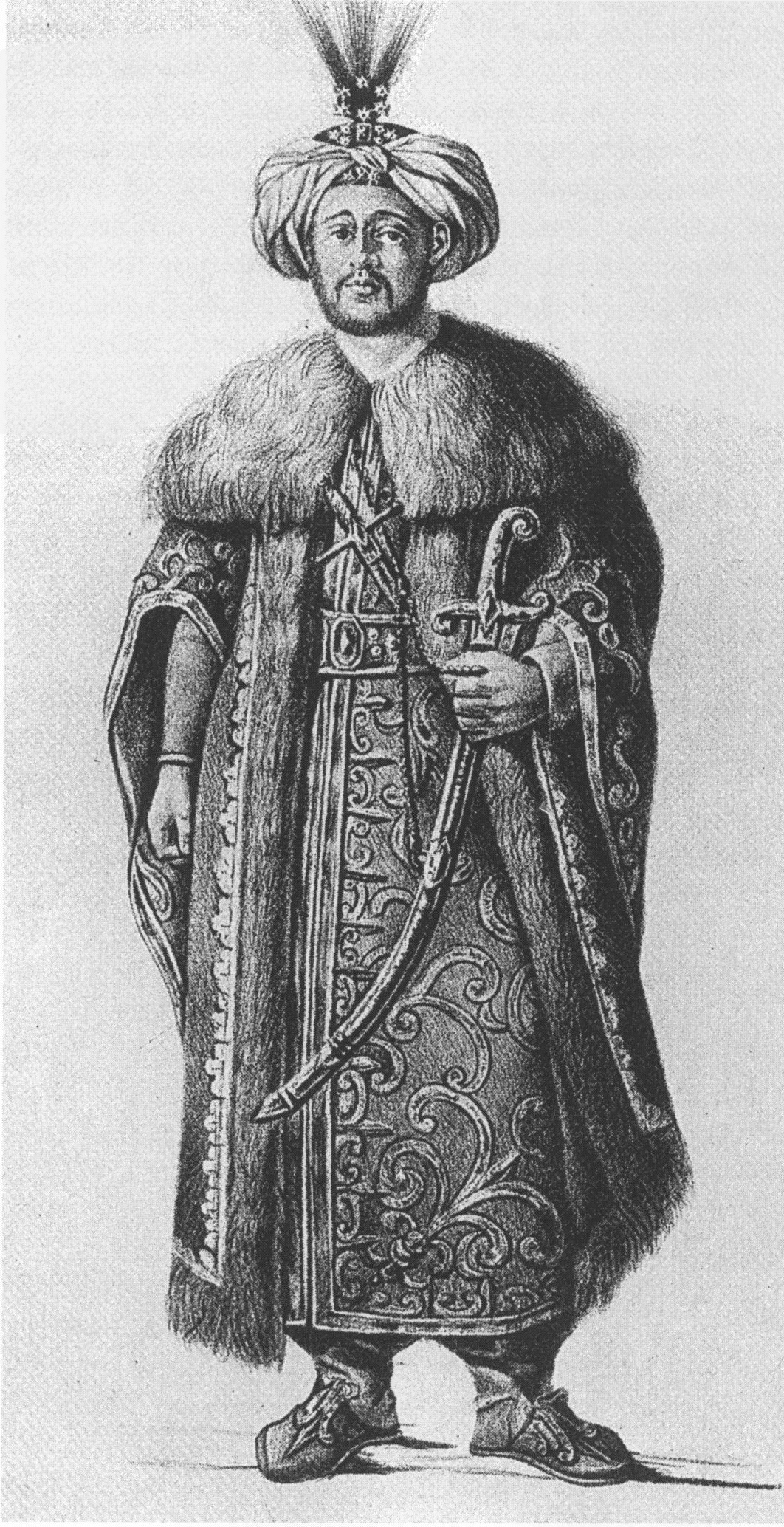
Filippo Galli as Selim in the La Scala premiere - Unknown engraver
“ It’s faintly surreal”
In Così fan tutte, Da Ponte invents a highly original character, Don Alfonso, who designs the rest of the story by making a wager to prove a point–that any woman will be unfaithful given the right temptations. Romani varies the scheme: his Alfonso-equivalent, the Poet, is just looking for a good story for the opera buffa he has to write, and his heroine is already spectacularly unfaithful, having both a husband and a lover in tow when she decides to flirt with the visiting Turk. At the same time he takes the Alfonso model a step farther: the Poet speaks directly to the audience about the opera buffa he has to write, and intervenes with the characters who turn up to see if he can get a good comedy out of them. It’s faintly surreal, turning in part on improbable disguises and impossible non-recognition of the disguised parties. It’s never clear who is really in control, or what is a game and what is in earnest–which perfectly suits Rossini’s delight in madcap situations and his genius for turning human ridiculousness into musical sparkle.
It was still common practice in those days to recycle and reshape pre-existing librettos. That had been standard operating procedure throughout the 18th century, and it held on for much of the early 19th. Da Ponte himself based much of Il Don Giovanni on an earlier version by Giovanni Bertati, and Verdi’s second opera, Un Giorno di Regno, used a revision of an old text by none other than Romani. For the second Scala opera in 1814, Romani took as his model a comic libretto by Caterino Mazzolà, quite probably because it had the Alfonso-like poet figure waiting to be developed. (Small world: Mazzolà had done the same thing for Mozart himself, revising Pietro Metastasio’s La Clemenza di Tito.) Why does this matter? Because it joins up with what Rossini shows clearly in the score–listen to the recurring motif in the trio for the Poet, Narciso, and Don Geronio, and see if you don’t recognize an echo of Don Alfonso’s proclamation “così fan tutte.” The young creators were attempting a sequel not to L’Italiana in Algeri, but rather to Mozart’s provocative masterpiece.
- Will Crutchfield
NOTE: Recent research confirms that the “Signor Angrisani” of the García tour, long assumed to be Carlo, was actually his brother Felice. We are looking for a portrait of Felice Angrisani!
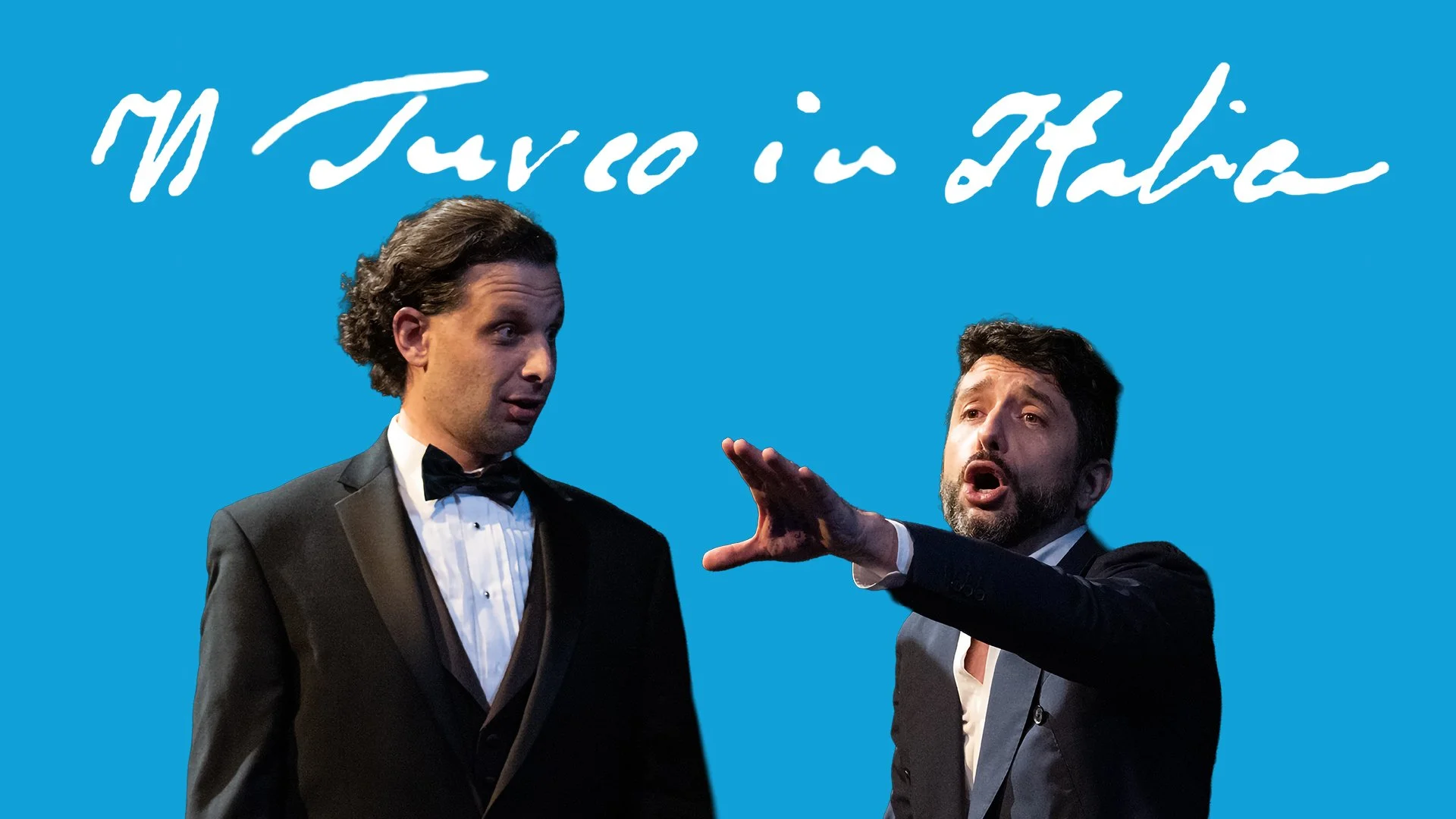
Header image: Vincent Graña and Mattia Venni in Crispino e la Comare (photo by Steven Pisano); Graphic from the handwriting of Gioachino Rossini