Wolfgang Amadeus Mozart (1756~1791)
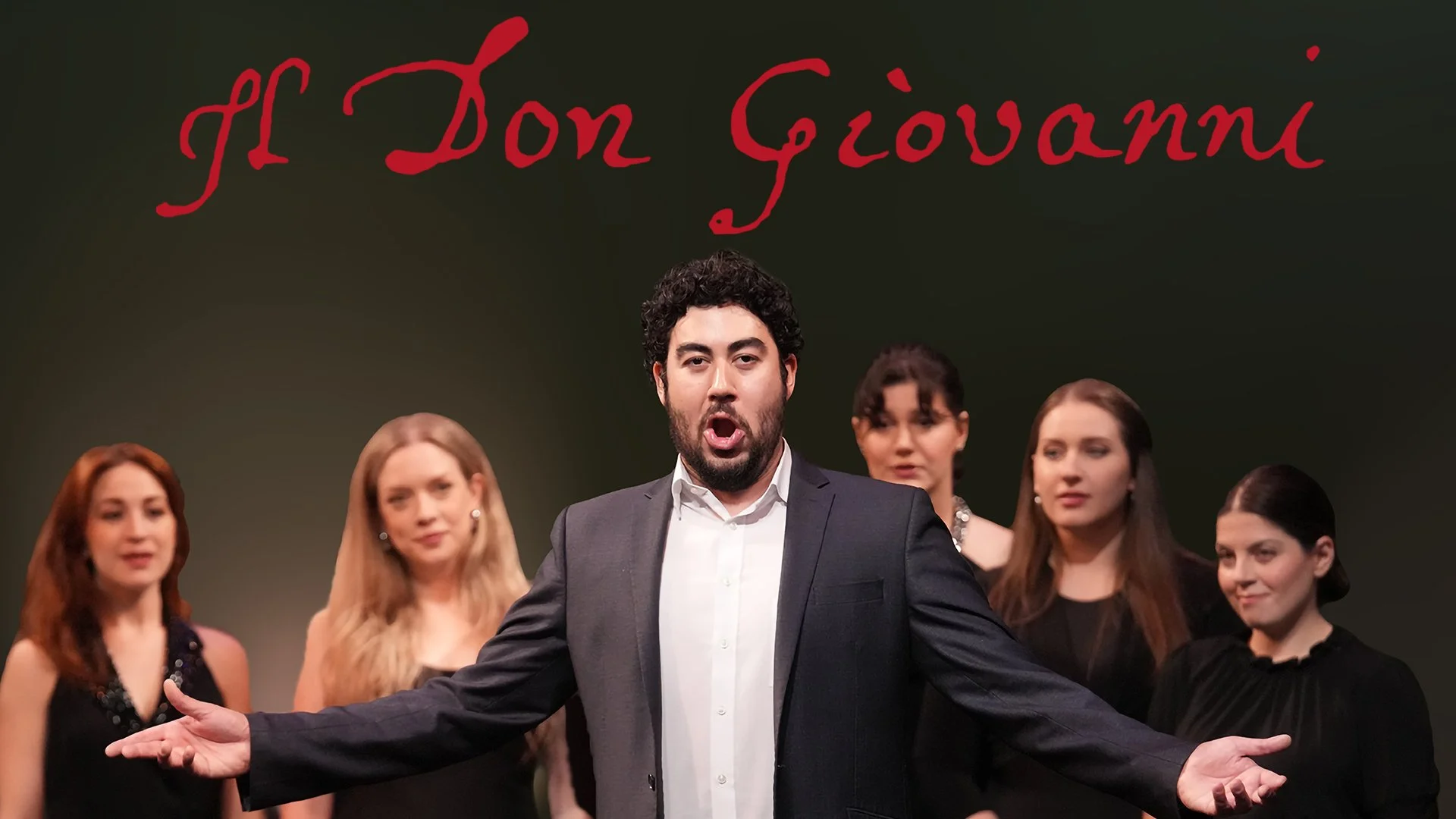
Il Don Giovanni
Saturday, July 11, 2026
Alexander Kasser Theater
Montclair State University
1:30 pm Pre-opera Serenade
2:00 pm Pre-opera Lecture
3:00 pm Opera
Wednesday, July 15, 2026
Rose Theater
Jazz at Lincoln Center
6:00 pm Pre-opera Serenade
6:30 pm Pre-opera Lecture
7:30 pm Opera
Dramma Buffo in two acts
Libretto: Lorenzo da Ponte
Premiere: 29 October 1787, Estates Theatre, Prague
U.S. Premiere: 23 May 1826, Park Theatre, New York
| Don Giovanni, extremely licentious young knight | Ricardo José Rivera |
| Donna Anna, a lady, betrothed to Don Ottavio | Elizabeth Novella |
| Don Ottavio, Donna Anna's lover | Martin Luther Clark |
| Il Commendatore, Donna Anna's father | Daniel Mobbs |
| Donna Elvira, a lady of Burgos, abandoned by Don Giovanni | Sedona Libero |
| Leporello, Don Giovanni's servant | Kevin Spooner |
| Zerlina, peasant | Simona Genga |
| Masetto, lover of Zerlina | Noah B. Rogers |
Teatro Nuovo Chorus and Orchestra
Geoffrey Loff, Maestro al Cembalo e Direttore
Sung in Italian with English supertitles by Luigi da Ponte.
The performance of Il Don Giovanni lasts approximately 3 hours 15 minutes including one intermission.
Il Don Giovanni: Expect the Unexpected

Lorenzo da Ponte Portrait by Samuel Morse
at the New York Yacht Club
The earliest opera the García company brought was as old for them as Nixon in China is for us today. Mozart would have been seventy if he had lived to hear it. Manuel García Sr. had made a specialty of the title role in London and Paris, and waiting for him in New York was none other than the opera’s librettist, Lorenzo da Ponte, still ready at 77 to make a fresh edition of the text and supervise the production, 39 years after he had done the same in collaboration with the composer in Prague. The poet had an English translation prepared by his son Luigi (Teatro Nuovo will use it for the projected titles), and wrote an important essay for the printed libretto.
“a leaner and faster-moving music-drama”
We are billing the work as Il Don Giovanni, as Da Ponte did in his edition (see below), and following the distillation he made from the Prague and Vienna versions of the opera. Its outline mostly corresponds to the familiar score, but shaped into a leaner and faster-moving music-drama. The production will also explore every trace of performing style that can be found from the time of the opera’s premiere to the time of its arrival in America–a massive amount of information, since this is one of the best-documented of all operas.
“Don Giovanni as a bel canto opera?”
So, Don Giovanni as a bel canto opera? Expect the unexpected! Mozart wrote it for mainstream Italian singers; he was working in a tradition that had no sharp dividing lines in the 17 years separating his early death from Rossini’s first opera. If Mozart had lived a normal lifespan, they would have been working side by side. And what we see in documents of performing style in the 1780s looks exactly like an early draft of Rossini’s vocal writing.
“can we understand this?”
Teatro Nuovo’s preparation process is designed to bring this to the fore: we are setting ourselves the challenge of looking at every surviving tempo marking, ornament, cadenza, vocal adjustment, or instrumental instruction, and postponing the question “do we like this?” until we have answered the question “can we understand this?” If we’re seeing something, however surprising, that a professional interpreter of Mozart’s time thought was a good idea, we need to know why and how.
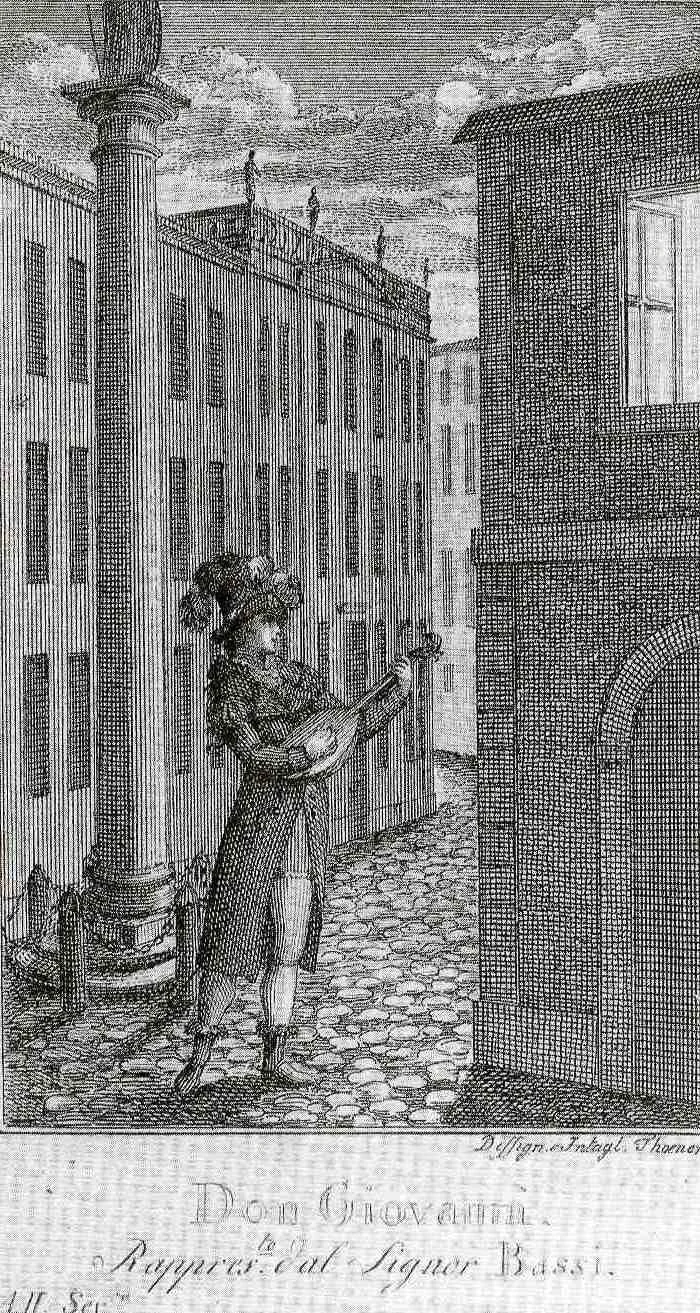
Luigi Bassi as Don Giovanni
- engraving by Medardus Thoenert
“grace and charismatic gallantry”
There are also interesting questions of dramatic approach to be explored. Luigi Bassi, Mozart’s original Don, kept going well into the Rossini era; quite a lot about his interpretation of the role has been brought to light by Magnus Tessing Schneider in a 2022 volume devoted to the singer. Schneider emphasizes the grace and charismatic gallantry for which Bassi was praised – we find a good deal of the same in descriptions of García – and has a provocative theory about an early divergence between Italian and German interpretations, with the latter proposing a more violent and criminal Don and an overtly Christian aspect to his punishment. Da Ponte, while sticking with the outlines of the traditional plot, seems to have been angling it in a different direction.
“an unfathomable masterpiece”
Mozart’s opera was called a dramma giocoso in its first published libretto. That relatively uncommon term has long been noticed, and has always considered right for a work with tints of darkness hitherto untouched in anything we would call comic opera. Over the years, the “dark side” has increasingly predominated in interpretation, but there is every indication that García and Da Ponte in 1826 were more engaged with its brilliant side. The librettist called his edition a dramma buffo. Mozart, in his own thematic catalog, called it an opera buffa (and gave the title as Il Dissoluto Punito, o Il Don Giovanni). The opera is an unfathomable masterpiece, and there is no one right way to approach it. For this production, we are taking our cues from what we know of García, Bassi, and Da Ponte, and expecting it to bring surprises and delight.
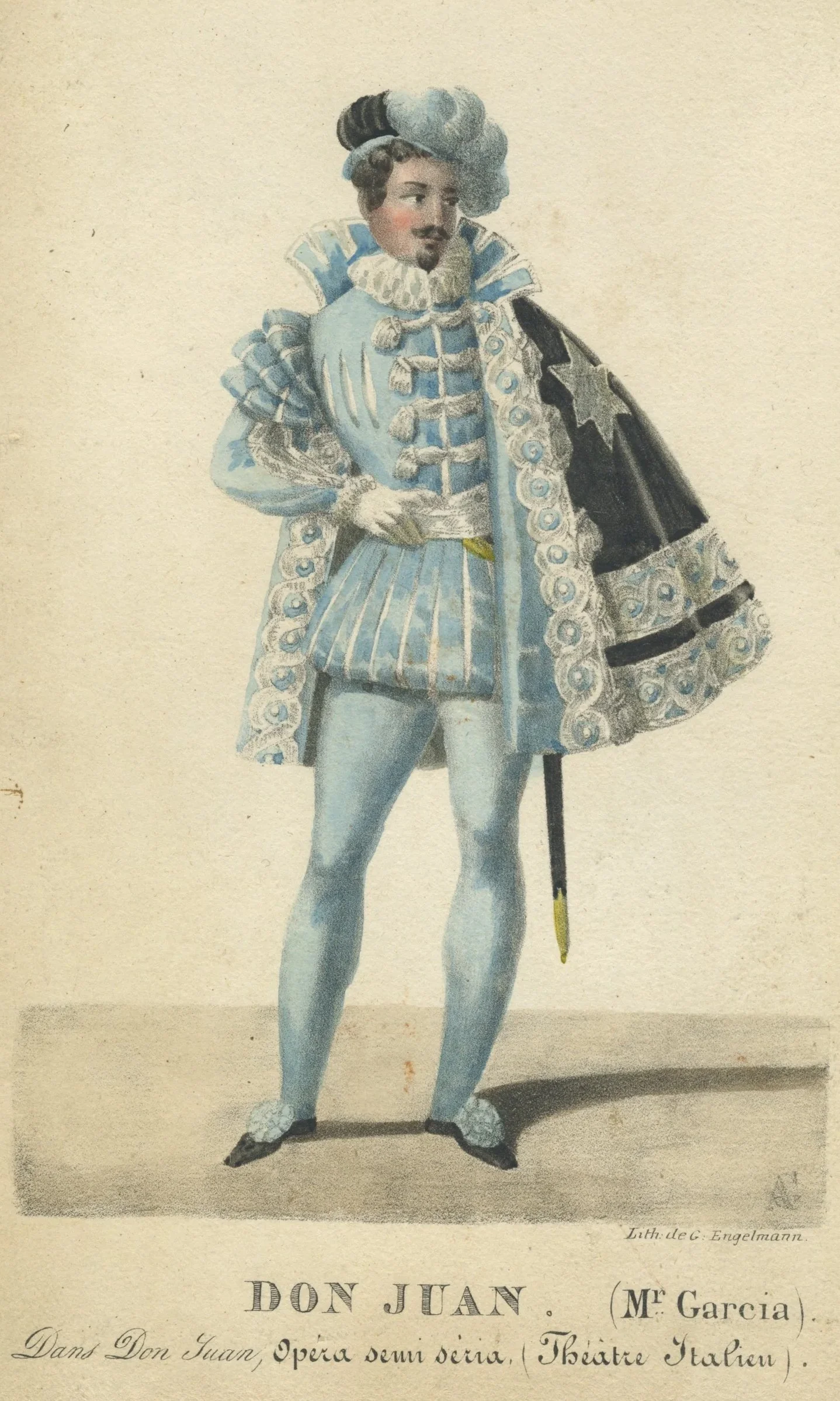
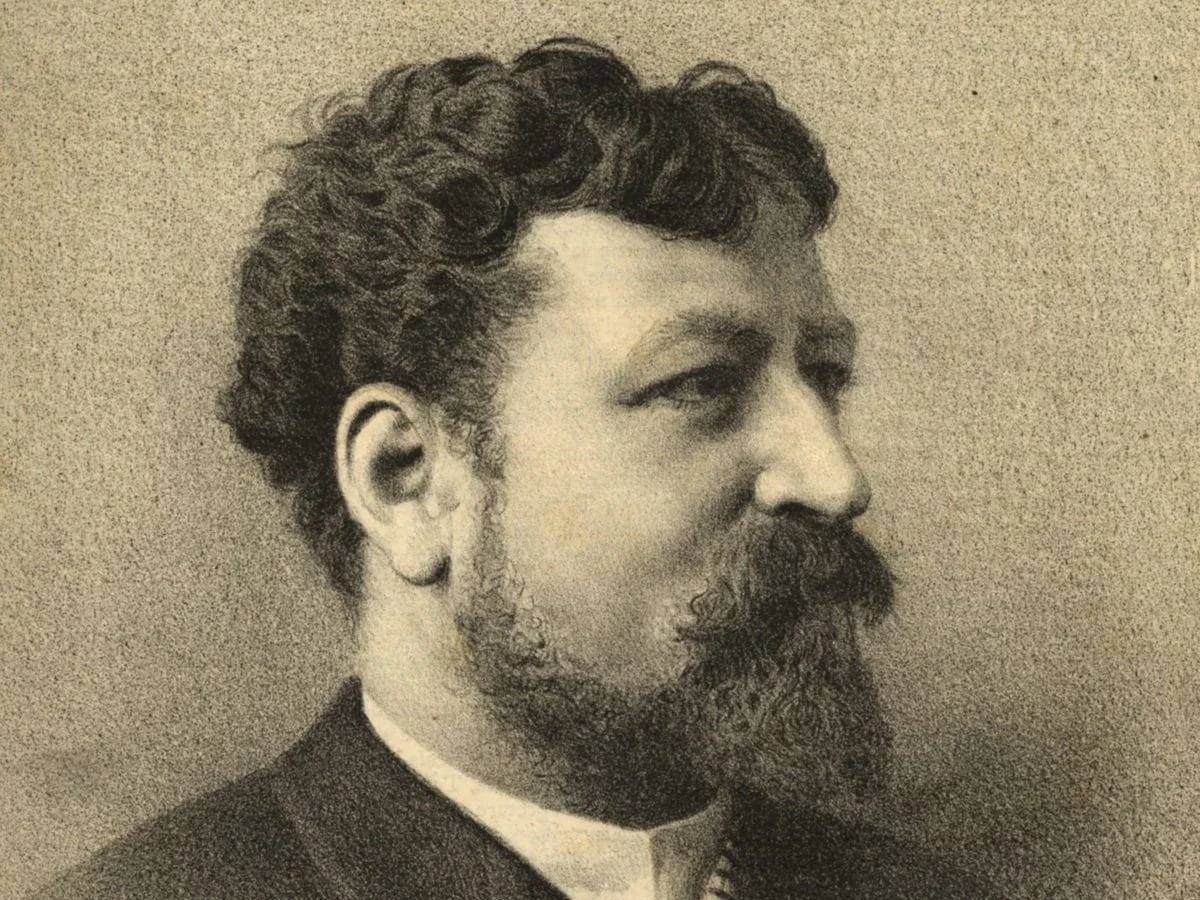
Manuel García Sr. as Don Giovanni
- Lithograph by Godefroy Engelmann
A note on the title: We are calling the opera Il Don Giovanni partly because Da Ponte and García did so in New York, and partly to distinguish it from the familiar editions of the opera. But in fact that was the title everywhere the opera was performed in Italian in its early life, including the world premiere libretto in Prague, Mozart's own handwritten thematic catalog, the early published editions of the score, and all productions in Italy itself. The habit of dropping the "il" seems to have come about later, after the work became familiar in French and German as Don Juan (which is the title Mozart wrote at the top of his autograph score).
- Will Crutchfield
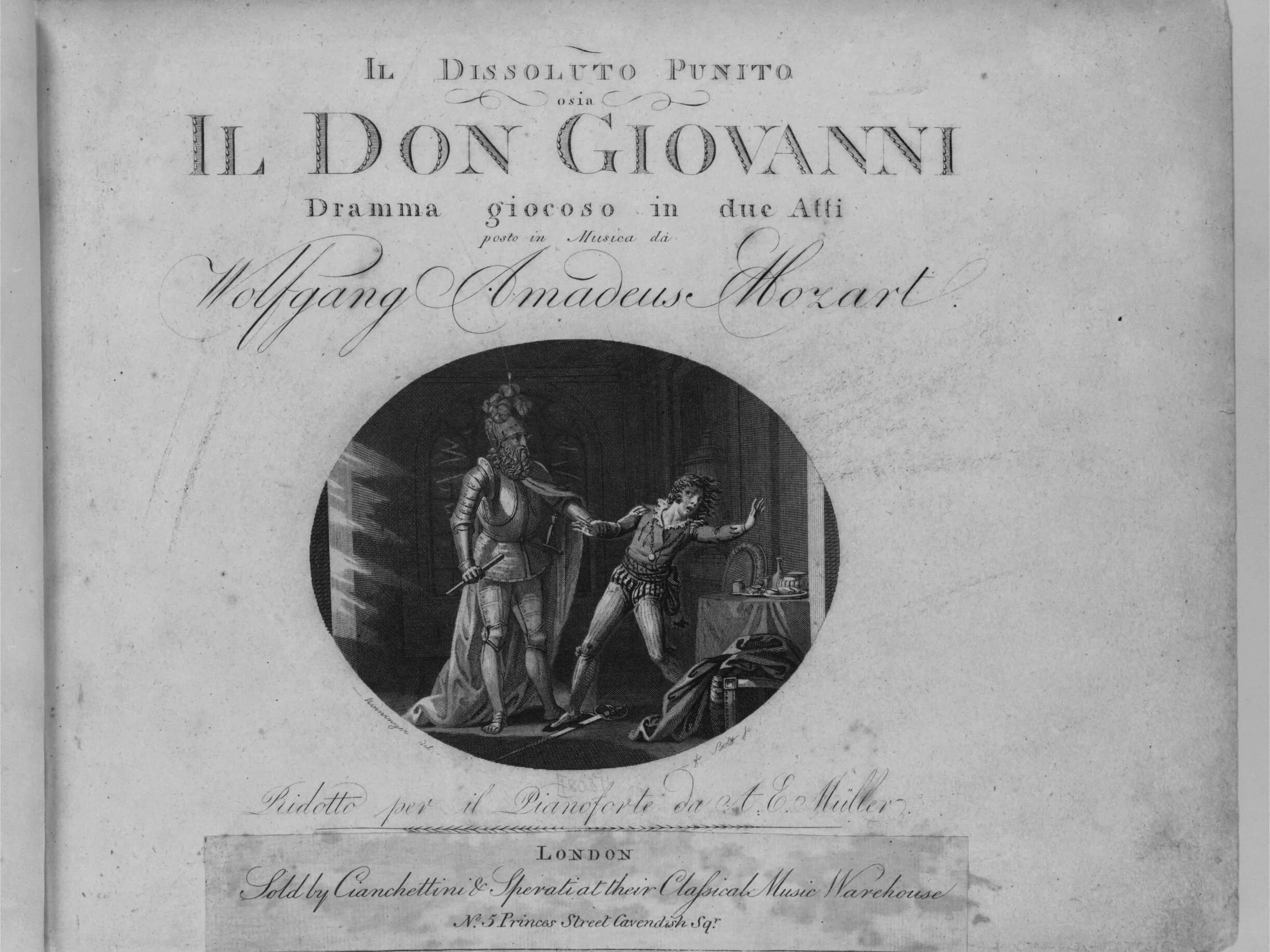
Il Don Giovanni - Title page of first edition
Header image: Ricardo José Rivera in Anna di Resburgo (photo by Steven Pisano); Graphic from the handwriting of Lorenzo da Ponte